
Shared insight

Over Functioning in Relationships: Doing Too Much and Feeling Too Little
Over functioning is not the same as being responsible, conscientious, or caring. Those things can be freely chosen.
Over functioning is different. It is driven by anxiety about what will happen if you do not step in, manage, fix, anticipate, or carry more than your share.
From the outside it looks like capability. Generosity. Being on top of things. From the inside it can feel like there is no position of rest. Like stopping is not actually available. Like if you put things down, something important will collapse, and somehow it will be your fault.
That pressure usually has a history.

People Pleasing and Resentment: The Hidden Cost of Always Being Easy
You said yes again, and somewhere in your body, you already knew. This post looks at what people pleasing really costs: the quiet slide into self abandonment, the resentment nobody talks about, and why being easy to love can still leave you feeling unknown. A gentle, trauma informed look at learning to make your yes honest again.

Childhood Emotional Neglect: Growing Up When Your Feelings Were Not Welcome.
There may be no single event you can point to. No dramatic moment. No obvious rupture. No clear before and after.
Just a particular kind of atmosphere, stretching quietly across years. The sense that certain feelings were too much for the room. That when you were upset, the response was a sigh, a change of subject, or a brisk you're fine. That your joy sometimes landed awkwardly, without anyone quite meeting it.
You learned, gradually and without knowing you were learning it, to make yourself smaller. To edit your inner world before it reached the surface. To need less. To be easier.
This is not a character flaw. This is often what happens when a child's emotional world goes chronically unwitnessed.

Abandonment Wounds: Why Letting Go Can Feel So Threatening
Abandonment is not just the fear that someone will leave. For many people, it is the fear that if someone leaves, they will lose access to safety, worth, stability, and love.
This is why a shift in someone's tone, a delayed reply, or a moment of emotional distance can feel so overwhelming — not because you are overreacting, but because another part of you is responding to something much older than this moment.
If relationships have ever felt like survival, this blog is for you.

How Do I Know If My Therapist Is Right For Me
You are allowed to wonder if your therapist is the right one for you.
You are allowed to notice when something in the room doesn't feel quite safe, quite seen, or quite right. You are allowed to name it. And if naming it doesn't change anything, you are allowed to keep looking.
Finding the right therapist is not a one chance process. And recognising that a particular relationship isn't the right one for you is not disloyalty, difficulty, or being too much. It is one of the most honest and important things you can do for yourself.

What Shame Actually Is: The Feeling Underneath Everything
Shame does not always announce itself clearly.
Sometimes it arrives as a sudden wish to disappear. In the middle of a conversation. After a small mistake. In the moment someone sees something in you that you would have preferred to keep hidden.
You might not even call it shame. You might call it anxiety, overthinking, perfectionism, or just being hard on yourself. Shame is good at moving through us in disguise, because looking at it directly means sitting with something almost unbearable: the fear that the problem is not what you have done, but who you are.
That belief is not the truth. But when shame is active, it can feel more real than almost anything else.

Why Being Chosen Isn't the Same as Feeling Chosen
You hear the words. I love you. I'm not going anywhere.
And for a moment, something in you settles.
Then the doubt returns. Quietly. Persistently. What if they change their mind? What if I'm too much? What if this is the moment it starts to shift?
This is what it feels like to carry an attachment wound into a relationship. Not because you don't trust your partner. But because a part of you learned, long before they arrived, that love wasn't always something you could rely on to stay.

Why Love Feels Dangerous When You Have Only Known Love With Conditions
You want closeness. You can feel the longing for someone who actually knows you, who stays, who doesn't require you to manage yourself into a particular shape in order to remain loved.
And yet when someone gets close, really close, something in you pulls back. Not dramatically. Just a subtle internal shift. A slight bracing. A part of you already watching for the moment the conditions reappear.
You might tell yourself you're being realistic. That you've just been hurt before. That trust has to be earned.
But underneath that, there may be something older. A nervous system that learned love and danger in the same place, at the same time, and hasn't yet fully separated them.

When Losing the Relationship Feels Like Losing Yourself
There is a particular kind of heartbreak that goes beyond missing another person. It is the heartbreak of no longer recognising yourself.
The replaying of conversations. The wondering what you could have done differently. The quiet, creeping conclusion that maybe you weren't enough. This isn't just grief. This is something older being uncovered — wounds that existed long before this relationship began, that love had been quietly soothing without you even realising it.
When the relationship ends, those wounds are no longer soothed. And what you're left with isn't just the loss of them. It's the return of everything you'd stopped having to feel.

Why You Can't Stop Blaming Yourself After the Relationship Ends
Did you blame yourself after the breakup? Replaying every conversation, convinced that if you'd just been calmer, easier, less needy, maybe they'd still be here. Here's what nobody tells you: self-blame after heartbreak is rarely about the truth of what happened. It's about control. Because if it was your fault, at least you have an answer. And if you have an answer, maybe you can make sure it never happens again. But what if the self-blame didn't actually start with this relationship? What if it started much earlier than that? Read the full blog to find out.
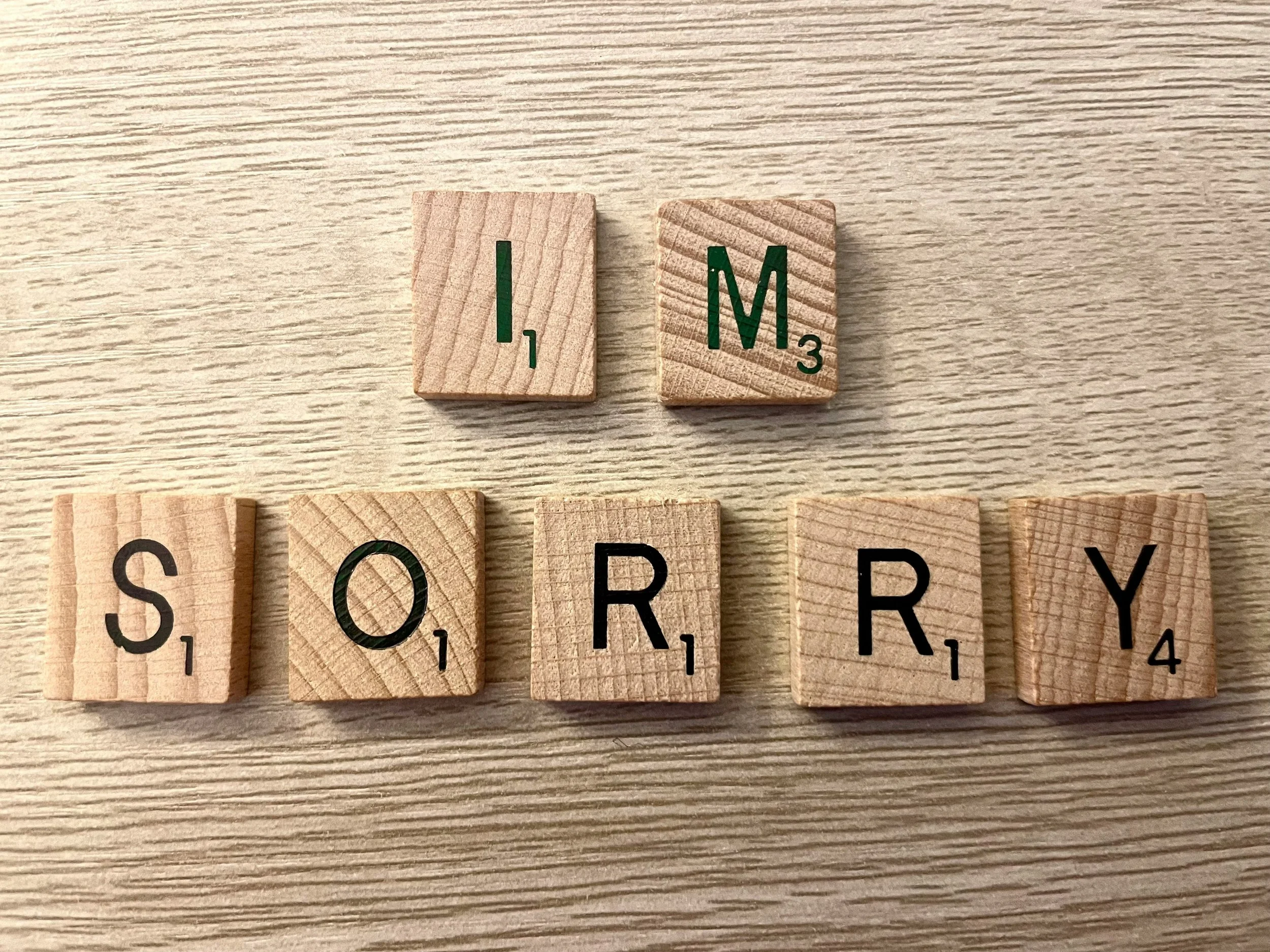
Why You Apologise Before You Know What You’ve Done
You can feel the shift before anyone says a word. Their face changes slightly. Their voice becomes flatter. And before you have even had time to ask yourself what is happening, something in you is already moving. You soften. You shrink back. The apology comes — sometimes before you even know what you are apologising for.

Why You’re Always Scanning Other People’s Moods
You walk into a room and feel the distance or anger in them immediately.
The slight tension in someone's shoulders. The response that came back just a little too clipped. The silence that lasted one beat too long.
And before you've even taken a breath, a part of you is already moving. Is it me? Have I done something? Are they okay?
You soften. You adjust. You find a way to ease the temperature of the room back to something that feels safe, even when you're the one who's not okay.
And then later, when someone turns to you and asks, "How are you doing?"
You go a little blank. So you deflect. You're fine. You're always fine.
If any of that landed somewhere familiar — this is not a personality flaw. It is not proof that you're too anxious or too sensitive.
It's a pattern. And like most patterns, it has a history.

Attachment Theory Relationships: Nurturing the Nervous System, Love, and Healthy Independence.
Independence is powerful, but your nervous system tells the deeper story of what you need in love. Learn how attachment patterns shape your relationships, why your body reacts before your mind does, and how to start breaking the cycle with my free guide Stop Abandoning Yourself for Love.

When Dreams Reveal What Waking Life Can’t:
Dreams often show hidden feelings and experiences that are hard to face when awake. They speak in symbols, reflect deep attachment wounds, and bring up physical sensations tied to emotional pain. Working with these dreams can open new paths for healing and connection.

Why Breaking Up Feels Like Withdrawal, and Why It’s So Hard to Let Go…
Freud believed dreams were the royal road to the unconscious a portal where repressed desires, fears, and conflicts emerge disguised in symbolic form. While some of his theories feel dated, the fundamental premise still holds truth: dreams often reveal what the waking self tries to deny or rationalise.


Psychotherapist vs Psychologist: Understanding Emotional Healing, Self-Worth, and Internal Family Systems Therapy
Confused about the difference between a psychotherapist and psychologist? Learn how psychotherapy supports emotional healing and self-worth.

Toxic Hope in Relationships: Why You Stay, What It Costs, and How to Set Yourself Free
Ever felt like you're doing all the work in a relationship and still left questioning your worth? This guide breaks down what self-abandonment really looks like, why we do it, and how to reclaim your truth and power — without chasing love that costs you your Self.

How to Stop Abandoning Yourself in Love
You tried to be easy. Chill. The one who doesn’t ask for too much.
But underneath that silence was a voice — yours.
This blog is for the woman who keeps abandoning herself in love… and is ready to come home to herself.

Is This Forever? Understanding Emotional Inconsistency in Relationships
Is this the right person?—Is this the relationship I want to keep showing up for?